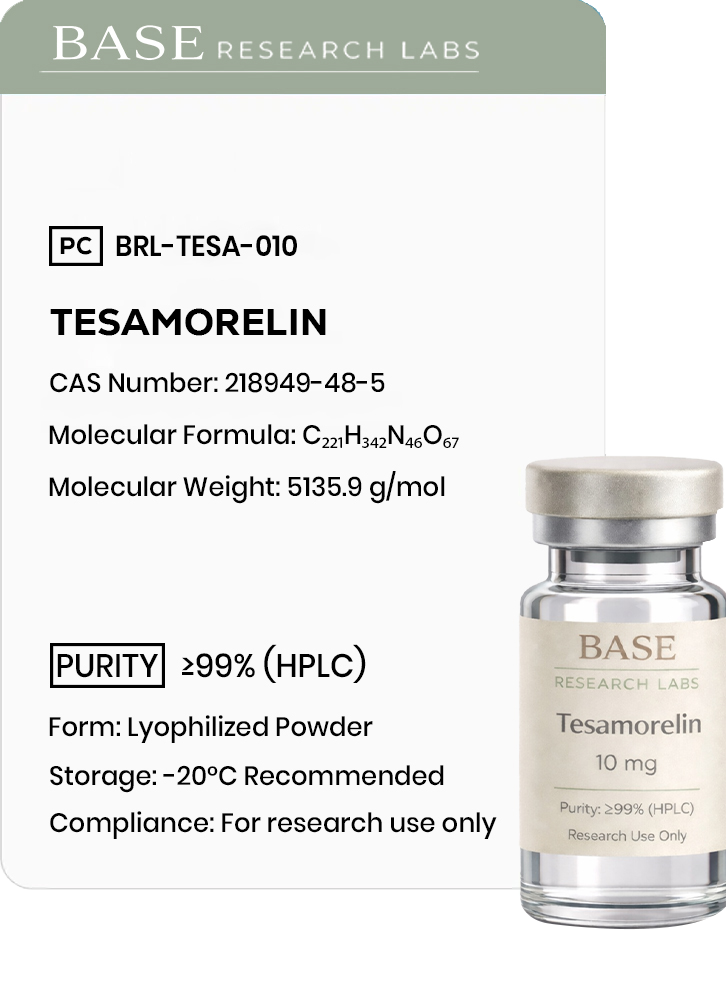
Tesamorelin is a growth hormone-releasing hormone (GHRH) analog that has been shown to increase IGF-1 levels in men by an average of 181 µg/L. It binds to and activates human GHRH receptors with potency comparable to endogenous GHRH. Beyond its growth hormone effects, tesamorelin offers additional benefits, including nootropic effects and triglyceride reduction.
Recent studies have demonstrated that tesamorelin can decrease carotid intima-media thickness (CIMT), visceral adipose tissue (VAT), and C-reactive protein (CRP) levels, without significantly affecting other pituitary hormones or their physiological pathways. Furthermore, research indicates that tesamorelin may improve cognitive function in both healthy older adults and individuals with mild cognitive impairment, who are at elevated risk for progression to Alzheimer’s disease.